Women and cannabis have a very special connection. The parallel between the female human and the female plant is more than just a metaphor. Both are very intuitive. Women’s wisdom comes from deep within, from a space that is not linear and can not be explained by logic. Cannabis is an intuitive medicine. It works in a way that is very specific and unique to each person who consumes it. This makes cannabis difficult to precisely understand and prescribe. As a result, many clinicians and researchers have steered away from it.
Parallels Between Cannabis Research and Women’s Health Studies

Just as there’s a shortage of medical trials for cannabis, there’s also a lack of such trials focusing on women’s health. Much of what we know about diseases and the effects of drugs is based on research conducted primarily on men, and often by men. For a long time, the US Food and Drug Administration (USFDA) didn’t allow women of childbearing age to participate in early-phase drug trials. The concern was that potential toxicity could affect their eggs and future reproductive capabilities.
This approach, however, assumes that a woman’s primary role is to bear children, and it takes away her right to make her own health decisions, including whether to participate in a study that could affect her eggs. This exclusion has led to the marketing of prescription drugs that pose greater risks to women than men. In fact, between 1997 and 2000, the USFDA removed 10 prescription drugs from the market due to severe side effects, and eight of these posed higher risks for women. A study in 2018 attributed this to significant male biases in all stages of medical research.
The Impact of Gender Bias in Medical Research
The notion that women are primarily for reproduction isn’t the only reason for the research gap. The female menstrual cycle and related hormones add many variables to a study. This often leads to women being left out of the research. As a result, conditions that mainly affect women are less studied compared to those affecting men. This is despite the fact that many women’s health issues cause significant physical distress and financial burdens. These health issues range from gynecological disorders and autoimmune diseases to chronic pain conditions, such as fibromyalgia.
The Shift in Perspectives: Cannabis for Women’s Health
Research on women’s health and cannabis is gaining importance. The volume of studies is increasing. Clinicians’ views on cannabis are also evolving. In recent years, I’ve talked to several doctors. Some of them occasionally suggest using cannabis during breastfeeding and pregnancy for specific conditions. This was unthinkable just a few years ago.

I recall a doctor advising me against renewing my cannabis prescription for insomnia. She strongly suggested I take Ambien instead. Her reason was the unknown long-term effects of cannabis. I understood her concern, given the scarcity of cannabis research. However, she was mistaken. There’s a long history of safe cannabis use. This spans across different eras and cultures, from the Old World to the New.
Exploring the History of Women and Cannabis

This upcoming series of posts will look at women and cannabis in a few different ways. First, we’ll discuss why women uniquely respond to cannabis. Then we’ll look at how women’s bodies and hormones work with the plant and influence its’ effects. (This information pertains to anyone who has female reproductive organs or hormones. It’s also important information for anyone who has women in their life, and wants to understand them a bit better.) Context is important, so let’s start there. Here is a quick look at ways women have used the cannabis plant for thousands of years.
Ancient Uses of Cannabis for Women’s Health
Cannabis has been used as a natural remedy for women’s symptoms and health issues across many cultures. The earliest references to women using cannabis probably come from ancient Mesopotamia. There, women created a salve for unspecified female ailments and difficult childbirth. This salve was made from hemp seeds and other botanical agents, such as saffron and mint, mixed with beer.
Cannabis in Childbirth: Historical Evidence
Historical clues about cannabis use can reveal stories from the past. One such clue came from a fourth-century burial tomb in Israel/Palestine. Explorers found the skeleton of a 14-year-old girl there. The evidence suggested she used cannabis during childbirth.
The tomb’s contents were taken to a lab for analysis. Researchers found out that the girl died in childbirth. Her baby’s head was too big for her small pelvis. They also found ashes in the tomb. Analysis of these ashes revealed phytocannabinoid metabolites. These come from the cannabis plant.
The researchers concluded that cannabis had been burned in a vessel. The young girl had inhaled the smoke. This was likely to help her during her difficult childbirth.

References to cannabis use for all kinds of women’s concerns can be found throughout ancient history and across civilizations. In ninth century Persia, the juice of cannabis seeds was mixed with a variety of other herbs to treat migraines, calm uterine pains, prevent miscarriage, and preserve fetuses in their mothers’ abdomens.
Cannabis and Goddess Worship
We can learn a lot about a society by understanding their religions and what they value. Various goddesses have been associated with cannabis throughout history. The worshipers of the Sumerian goddess Ishtar would burn cannabis incense in her honor. The Taoist goddess Magu, whose name means “hemp maiden” is another example.

Cannabis in Traditional Chinese Medicine
In ancient Chinese medicine, drugs were considered either feminine, or yin, and masculine, or yang. Yin represented the weak, passive, and negative female influence in nature. Yang represented the strong, active, and positive male force. When yin and yang were in balance, the body was in harmony and was healthy. When yin and yang were out of balance, the body was in a state of disequilibrium and ill. Cannabis was a unique plant because it was considered both yin and yang. This was because both the female and male plants grew in the wild. Eventually, Chinese doctors realized that the female plant produced more medicine. As a result, they began to cultivate it instead of the male plant. Accordingly, cannabis was used to treat absences of yin, including female “weaknesses”, such as menstruation.
Cannabis for Menstrual Relief: From Ancient Times to the Victorian Era
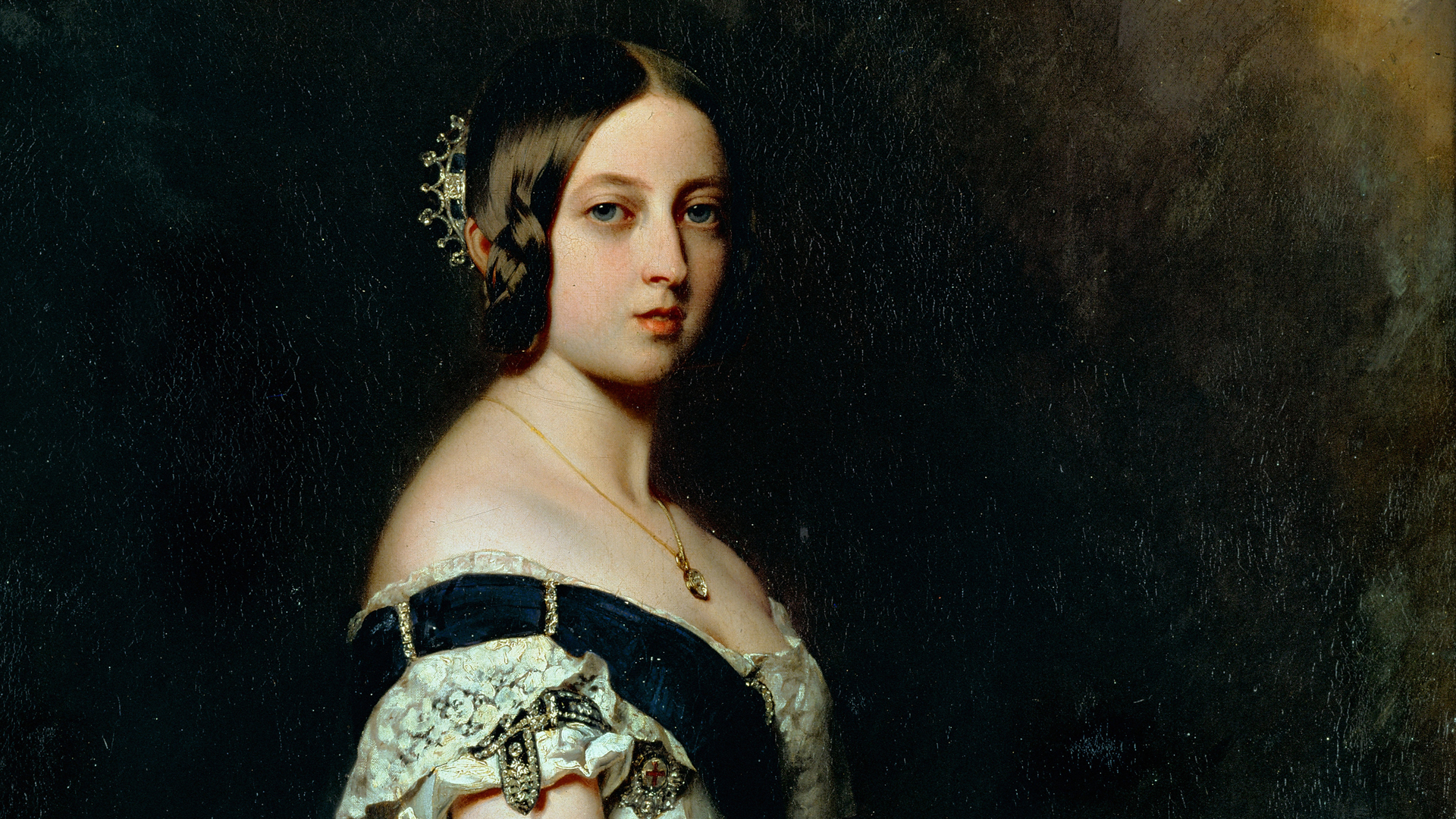
Throughout the centuries, women have continued to use cannabis to alleviate the symptoms of PMS and menstruation. Mayan and Aztec women took baths full of medicinal herbs, including cannabis, for menstrual relief. Eleventh-century European women used a cannabis ointment to “disperse the swelling” from swollen premenstrual breasts. In the nineteenth century, Queen Victoria‘s doctor prescribed her a cannabis tincture to ease her menstrual cramps. This led other doctors to promote the same practice among their patients.
Cannabis Use During Pregnancy
Nowadays, pregnant people aren’t allowed to participate in medical trials. This means you’ll be hard pressed to find a physician who will publicly recommend cannabis for use during pregnancy. But the plant has been used as a pregnancy and birth aid by many different cultures across history. Ancient Egyptian women ground cannabis into honey and used the botanical substance vaginally to help ease their contractions during childbirth.
More recently, cannabis was used as a nineteenth-century medicinal aid for labor contractions. It’s listed for this purpose in the Dispensatory of the United States, a pharmaceutical reference manual. American physician T.L Wright noted the benefit of cannabis in relieving morning sickness in a letter. Referring to the case of a woman who had exhausted all other available remedies he wrote, “In a patient of mine, who was suffering to an extent that threatened death, with vomiting, I found the vomiting complete arrested by cannabis indica, given in repeated doses of three grains every four hours, until several doses were taken.”

Cannabis for Pleasure and Ritual: Women’s Experiences Across Cultures
Women have used cannabis for more than physical medicine for a long time too. Stories of women consuming cannabis for enjoyment or ritual come from places as far apart as India, South America, and Russia. In the late 20th century, archaeologists discovered the 2000-year old body of a Scythian princess and priestess placed in a hallowed tree trunk. Her body had been frozen in a tomb in Siberia. She was so well preserved that archaeologists could still see intricate tattoos on her left arm. A few of her possessions were buried alongside her. Among them was a small container of cannabis, which she probably smoked for pleasure and used in pagan rituals.
Overcoming Stigma: The Future of Women and Cannabis
Women are intuitive creatures, and cannabis is powerful medicine. But despite the long history of women and cannabis use, lingering stigma around the plant has prevented women from understanding how the plant can successfully provide natural and holistic relief and support during all the phases of their lives. That’s why we continue to explore how cannabis works with the female body to achieve optimal wellness and health.
In the next post, we’ll explore the endocannabinoid system and how a woman can take advantage of cannabis’s unique therapeutic aspects.
Kudos on your recent post! It was a quick but impactful read. Thanks for sharing your thoughts!
I do believe all the ideas youve presented for your post They are really convincing and will certainly work Nonetheless the posts are too short for novices May just you please lengthen them a little from subsequent time Thanks for the post
The author’s eloquence and precision in writing are commendable.
of course like your website but you have to check the spelling on several of your posts A number of them are rife with spelling issues and I in finding it very troublesome to inform the reality on the other hand I will certainly come back again
certainly like your website but you need to take a look at the spelling on quite a few of your posts Many of them are rife with spelling problems and I find it very troublesome to inform the reality nevertheless I will definitely come back again
Access Now This link and make money online easy
everton v chelsea
arsenal wolverhampton
of course like your website but you have to check the spelling on several of your posts A number of them are rife with spelling issues and I in finding it very troublesome to inform the reality on the other hand I will certainly come back again
Experience the difference of personalized attention at our Visalia dental office.
Enhance your appearance and self-esteem with cosmetic dentistry solutions in Visalia.
This will be very useful for my next project, thank you for the detailed information.
I do not even know how I ended up here but I thought this post was great I do not know who you are but certainly youre going to a famous blogger if you are not already Cheers
I do believe all the ideas youve presented for your post They are really convincing and will certainly work Nonetheless the posts are too short for novices May just you please lengthen them a little from subsequent time Thanks for the post